Water Damage Assessment on Site — Photos to Report
Do the water damage assessment on site by voice: loss, category, every room with its moisture reading, photos, mitigation, and the report before you leave.
What you’ll see
- A water damage assessment usually starts in two inches of water with a clipboard that is also wet. In ReportWalk you open the water damage initial assessment template and talk. Loss information first: source of water, water category and whether the source is stopped fill in as you speak.
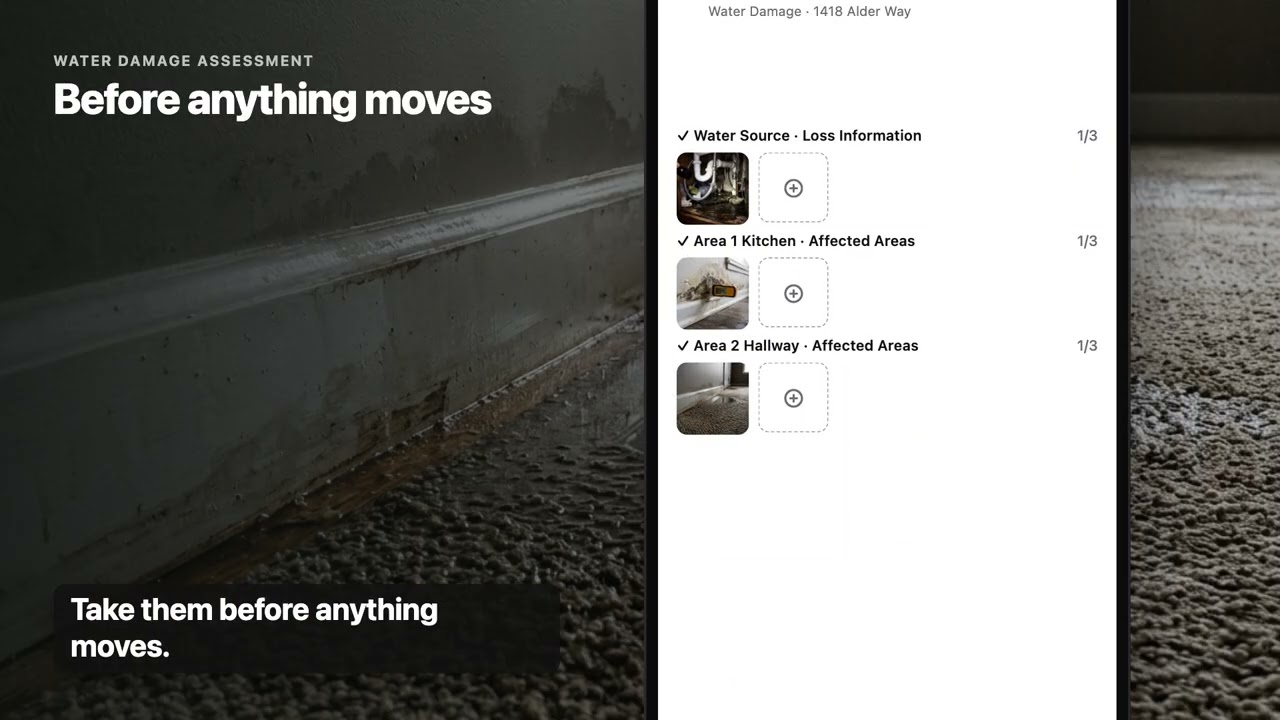
- Affected areas take one entry per room, each with the materials affected, the moisture reading and standing water. Extent and class records the class of water intrusion, the affected square footage and visible mold. Take the photos as you go, before anything moves, and they file themselves into the right section.
- Mitigation deployed records water extracted, air movers, dehumidifiers and demolition such as flood cuts, with photos of the equipment in place. Back in the truck, the water damage report is ready as a PDF or a live link: loss, category and class, every room with its reading, photos where they belong.
Transcript
A water damage assessment usually starts with a homeowner standing in two inches of water, asking how bad it is, while you try to write on a clipboard that is also wet.
Open the water damage assessment in ReportWalk. Loss information first. Tap once and talk.
“Supply line under the kitchen sink. Clean water. It’s shut off.”
Source of water, category one, water stopped: filled.
Then affected areas, one room at a time.
“Kitchen. Drywall and baseboard wet, cabinets too. Eighty-nine percent on the meter. Hallway: carpet and pad, standing water.”
Two areas, each its own entry. Materials, moisture reading, standing water.
Extent and class, same thing. “Class two, about three hundred square feet, no visible mold.” Done.
Take the photos as you go. The source, each room. They file themselves into the right section.
Take them before anything moves. The adjuster wasn’t there, and “trust me, it was wet” is not a photo.
Then mitigation. “Water extracted. Four air movers, two dehumidifiers. Baseboard off, flood cuts in the kitchen.”
Equipment in place, photographed. A record that drying started today.
Back in the truck, the water damage report is ready. Loss, category and class, every room with its reading, photos where they belong. PDF or a live link.
The carpet needs three days to dry. The report doesn’t.
Related
 1:28
AI Inspection Notes Where You Get the Last Word | ReportWalk
AI inspection notes where you get the last word: speak, the AI fills the fields, and anything you type beats what it heard.
 1:45
Storm Damage Photos That Hold Up — GPS, Time and Weather on Record
Storm damage photos that record when, where and which way you were facing: GPS, time and heading on every shot, and the weather on the walk.
 Short0:55
Contents Pack-Out Inventory by Voice | ReportWalk
A contents pack-out inventory by voice: say each box as you pack it, and every item joins the list with its room, box number and condition.